
Why Most Site Cameras Fail During Victorian Storm Season
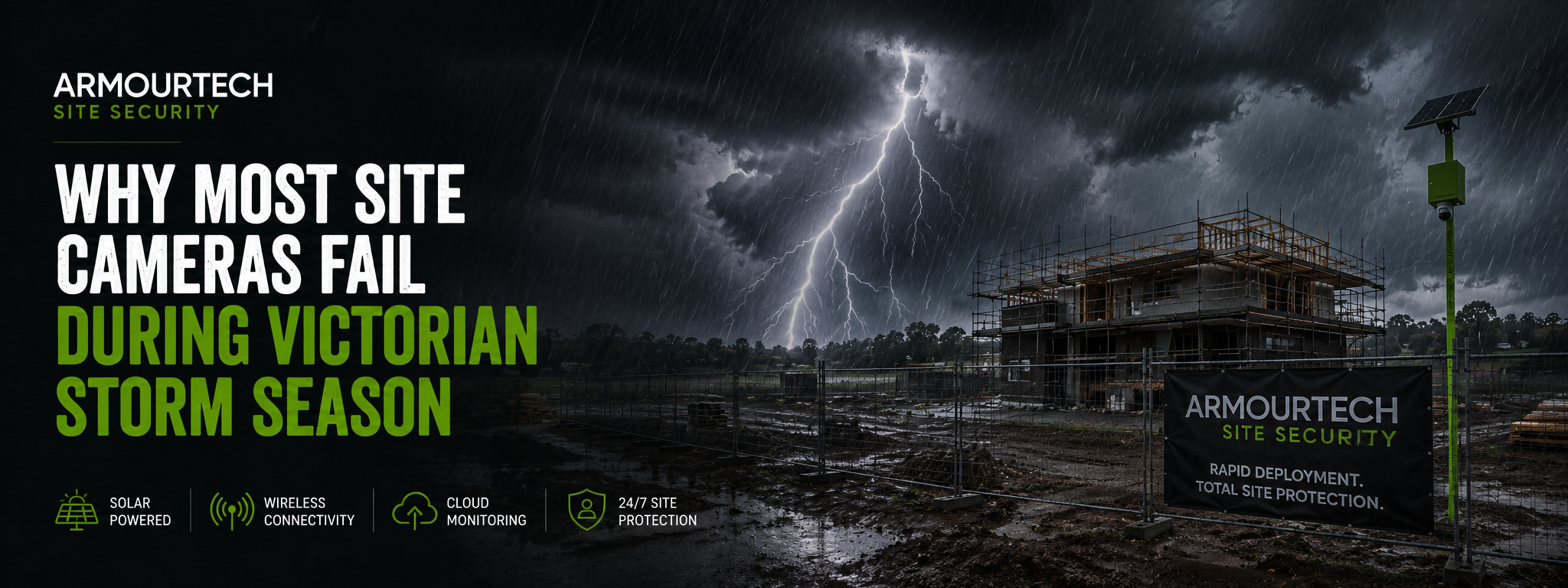
Victorian Storms Are Tough on Construction Site Security
If you've managed a construction site through a Victorian winter, you already know how unpredictable the weather can be. Heavy rain, gale-force winds, hail and sudden temperature changes don't just delay construction—they can also expose weaknesses in your site security.
Many construction sites rely on temporary camera systems that simply aren't built for these conditions. Once a camera fails, your site is effectively left unprotected, increasing the risk of theft, vandalism and insurance claims.
Choosing the right weatherproof surveillance cameras isn't just about image quality—it's about ensuring your security system continues protecting your project when the weather is at its worst.
Why Site Cameras Fail During Storm Season
Construction sites are particularly demanding environments. Unlike residential installations, cameras are often mounted temporarily, exposed to the elements and operating without the protection of permanent infrastructure.
Common causes of failure include:
Water entering poorly sealed camera housings
Corrosion from prolonged exposure to moisture
Wind movement causing cameras to lose alignment
Loose mounting systems vibrating during strong winds
Cheap power supplies failing in wet conditions
Moisture causing lens fogging and reduced image quality
The result is often blurry footage—or no footage at all—when you need it most.
The Specifications That Actually Matter
Not all weatherproof security cameras are built to the same standard. Marketing terms like "outdoor rated" don't always tell the full story.
When selecting a building site security camera, look for features including:
High IP Weather Rating
An IP66 or IP67 rating provides strong protection against dust and heavy rain, making the camera suitable for harsh Australian conditions.
Rugged Metal Housing
Metal housings generally provide greater durability than lightweight plastic alternatives and better withstand impacts and UV exposure.
Secure Mounting System
Strong brackets and rigid mounting reduce vibration and help cameras stay correctly positioned during high winds.
High-Quality Lens Protection
Anti-glare coatings and weather-resistant lens designs help maintain image quality during rain and changing light conditions.
Reliable Remote Monitoring
Storms often prevent regular site visits. Remote viewing allows builders to confirm the system remains operational without travelling to site.
Why Solar Construction Cameras Need Extra Protection
Many remote construction sites don't have permanent power, making solar security systems the preferred option.
However, a solar-powered system needs more than just a weatherproof camera.
A complete unit should also protect:
Solar panels
Batteries
Communications equipment
Power management hardware
Alarm systems
If one component fails, the entire security system can stop working.
At ArmourTech, our solar security towers are designed specifically for Australian construction sites, combining robust camera hardware with reliable off-grid power and remote connectivity.
Storm Preparation Tips for Builders
Before storm season arrives, it's worth carrying out a simple inspection of your security equipment.
Check that:
Camera housings remain fully sealed
Mounting bolts are tight
Solar panels are clean and securely fastened
Batteries are performing correctly
Live camera feeds are operating normally
Motion detection and alarms are functioning correctly
A quick inspection can prevent expensive failures when severe weather arrives.
Investing in Reliability Saves Money
Replacing damaged equipment, organising emergency call-outs or dealing with theft after a camera failure often costs significantly more than choosing higher-quality equipment in the first place.
Reliable weatherproof surveillance cameras reduce downtime, improve evidence collection and provide greater confidence that your site remains protected throughout Victoria's storm season.
When you're protecting valuable tools, machinery and materials, reliability isn't an optional extra—it's essential.
Protect Your Site Before the Next Storm
ArmourTech provides professional-grade security solutions designed specifically for Australian construction sites.
Our systems combine:
AI-powered surveillance
Solar-powered operation
Remote live viewing
Active deterrents including sirens and strobe lights
Rapid deployment without mains power or internet
Whether you're securing a residential build or a large commercial project, we can help you choose a system built to withstand Victorian conditions.
Contact ArmourTech today to discuss a security solution that's ready for whatever the weather throws at it.
Frequently Asked Questions
Do all outdoor security cameras perform well in storms?
No. Many consumer-grade outdoor cameras are designed for residential use and may struggle in prolonged heavy rain, strong winds or exposed construction environments. Commercial-grade weatherproof cameras with high IP ratings and robust mounting systems are better suited to Victorian building sites.
Can strong winds damage site cameras?
Yes. Strong winds can loosen mounts, misalign cameras or damage poorly secured equipment. Choosing heavy-duty brackets and regularly inspecting installations helps minimise these risks.
How often should site cameras be inspected before storm season?
It's good practice to inspect construction site cameras before winter begins and after any significant weather event. Regular checks ensure housings remain sealed, mounts are secure and the system is operating correctly.
What's the difference between weatherproof and waterproof CCTV cameras?
Weatherproof cameras are designed to withstand rain, dust and normal outdoor conditions. Waterproof cameras are engineered to resist complete water immersion for a specified period. For most construction sites, a high-quality weatherproof camera with an IP66 or IP67 rating is the appropriate choice.
How can builders reduce camera failures during extreme weather?
Choose commercial-grade equipment with suitable IP ratings, use secure mounting systems, inspect cameras regularly, protect power systems and use remote monitoring so faults can be identified quickly before they leave your site unprotected.